April 10, 2026
Location: Janskerkhof 2-3, room 0.21
Large deviations for binary collision models.
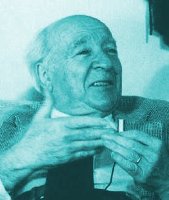
In 1956 Mark Kac introduced a stochastic microscopic model of binary collisions to obtain a rigorous derivation of the space homogeneous Boltzmann equation. The microscopic dynamics, called the Kac's walk, obeys the same conservation laws as the corresponding Boltzmann equation, foremost among them the energy conservation. I will present some results on large deviations for binary collision models, and I will show that, although the dynamics conserve energy, atypical paths that violate energy conservation may occur with exponentially small probability in the number of particles. In particular I will exhibit energy increasing paths and condensation-like phenomena. As a consequence, a dynamical phase transition may arise in the asymptotic behavior of the total number of the collisions.
Using Feynman-Kac for systems of non-linear reaction-diffusion equations
Almost 50 years ago, Murray Bramson showed how the use of the Feynman-Kac representation for linear pdes can also give very precise results on the analysis of non-linear PDEs, notably the F-KPP equation. In this talk, I will discuss the possibility to use Feynman-Kac also for systems of coupled F-KPP equations. In a particular case, I will show that this can not only provide nice results on the behaviour of wave speeds, but also very intuitive explanations. I will also discuss some ongoing work and open problems. This is joint work with Lisa Hartung.